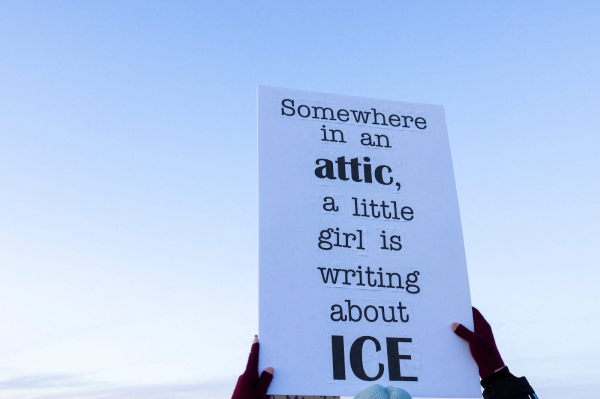
The last year has seen the number of Immigration Customs Enforcement (ICE) officers increase by 120%, leading to conflict and questions across the country. In 2025, 43,305 ICE arrests were made. As of January 7, 2026, around 69,000 people remain in ICE detention. 52% had criminal convictions or pending criminal charges, and 5% have been convicted of violent offenses. This translates to 752 non-citizens convicted of murder and 1,693 convicted of sexual assault. The number of people in detention is at an all-time high, even higher than after the 9/11 attacks. Kristi Noem, Secretary of Homeland Security, claims that the increase in ICE agents is for protection against domestic terrorists.
ICE’s annual budget is $78 billion. 10 years ago, the budget was less than $6 billion. This significant increase is largely due to President Trump’s “One Big Beautiful Bill.” Signed on July 4, 2025, the bill sets aside $170 million to support the president’s border goal, alongside $78 billion allocated to ICE. The purpose for this large sum, according to the White House border administrator Tom Homan in an interview with NPR, is, “The more beds that we have, the more bad guys we arrest.” Nearly $4 billion of the 78 are listed as an “obligated balance,” while the rest is listed as “unobligated,” at the disposal of both the Department of Homeland Security (DHS) and ICE.
Training for ICE agents has decreased from its prior 16 week in-house training center period to 6.5 weeks, or 47 days. According to The Atlantic, the 47-day period is to honor President Trump as the 47th president of the United States. The graduation requirements from the ICE academy include the following: three written exams with a 70% score on the laws; a physical abilities assessment and completed classes on physical techniques, first aid, firearms, driver training, conduct and efficiency. With a shortened training time, the classes have been affected with little publicized changes – extremely shortening the training for immigration officers. One cut made to the program was the previous existing five-week spanish language training program that required a 70% test score or above to graduate. This has been replaced with a $1.5 million technology with “robust translation services.” Another change made for enforcement officers by the Trump administration is making the use of body cameras optional.
The establishment of ICE can be traced back to after 9/11. After the attacks in 2001, DHS moved to pass the act for ICE in early 2002, before the organization was officially created in March 2003. The mission statement listed by ICE is to “Protect America through criminal investigations and enforcing immigration laws to preserve national security and public safety.”
ICE agents are not legally allowed to conduct a search without consent or probable cause. Probable cause is when the public has reasonable or trustworthy information to warrant that someone is committing a crime. This is defended by the Fourth Amendment, protecting all people on U.S. soil against unreasonable search and seizure.
To regulate officers, the ICE Office of Professional Responsibility is responsible for upholding the agency’s standards through a disciplinary approach including security, inspections and investigations to promote “organizational heal, integrity and accountability across the agency.”
In September, the Supreme Court ruled on Noem v. Vasquez, lifting the bar on ICE agents from racially profiling. This allowed the agents to use race, ethnicity, language and occupation as grounds for stopping and questioning people. The lift of the ban has proven to have a disproportionate impact on Latino communities. In a study done by UCLA in October, nine out of ten arrests made by ICE were found to be of a Latino person. Other ethnic groups are also targeted in specific places; Somali immigrants, through Operation Metro Surge, are the primary target in Minnesota.
In December, 2025, two thousand ICE agents were deployed to Minneapolis, Minnesota. The city has been a capital of ICE brutality. On January 7, Renee Good was shot three times inside her vehicle by an ICE agent. Witnesses told FOX 9 that multiple agents were attempting to get inside of her vehicle, holding on to the driver’s side door. President Trump said to the New York Times “she ran [the ICE agent] over,” while video footage shows Good driving away from three ICE agents, with no indication that the shooting agent, Jonathan Ross, had been run over. Ross visibly stood in front of the vehicle, putting himself in a “dangerous position,” said New York Times video analysts. Good was a 37-year-old U.S. citizen, mother of three, a wife and well loved community member whose murder was mourned with a vigil at her shooting site.
17 days later, 37-year-old ICU nurse Alex Pretti was shot and killed by agents in Minneapolis on January 24. The Department of Homeland Security said they began wrestling Pretti to the ground when they saw him brandishing a handgun and approaching federal agents with the intent to “massacre” them. DHS originally claimed they only acted in defense. Video footage instead shows Pretti with a cellphone, filming an encounter between agents and two civilians. The masked and armed agents shoved the civilians to the ground, which is when Pretti approached. He attempted to put himself between the agent and the civilians when he was pepper sprayed. The spray continued until Pretti stopped trying to help the civilians. Still holding his phone, Pretti was pinned to the ground, surrounded by agents and struck repeatedly with the pepper spray canister. An agent then fired one shot at Pretti’s back at close range, followed by at least nine more shots within five seconds. Pretti was licensed to carry a gun in Minnesota. Video evidence shows he never pulled a gun out. His hands are visible in the video footage.
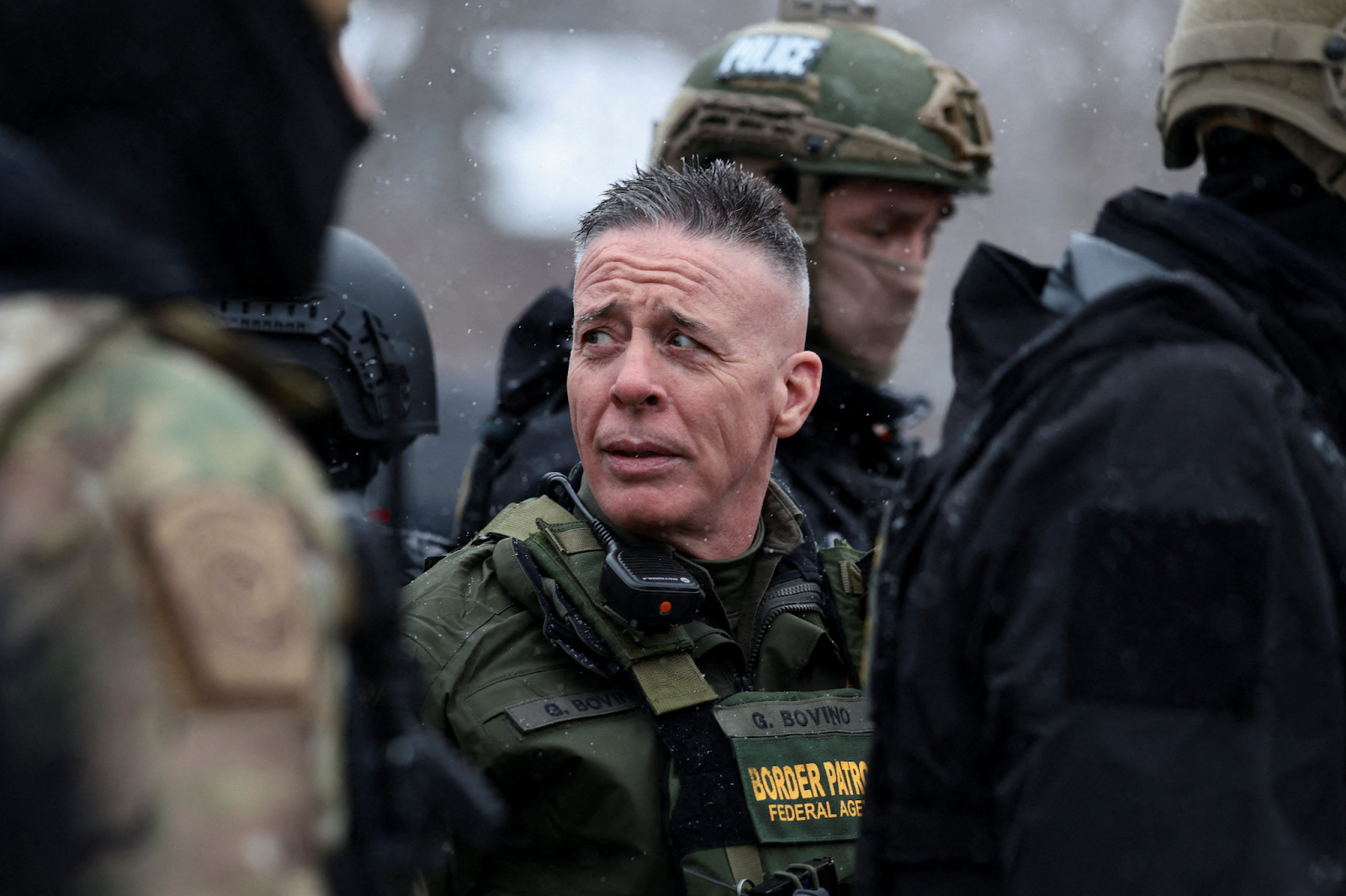
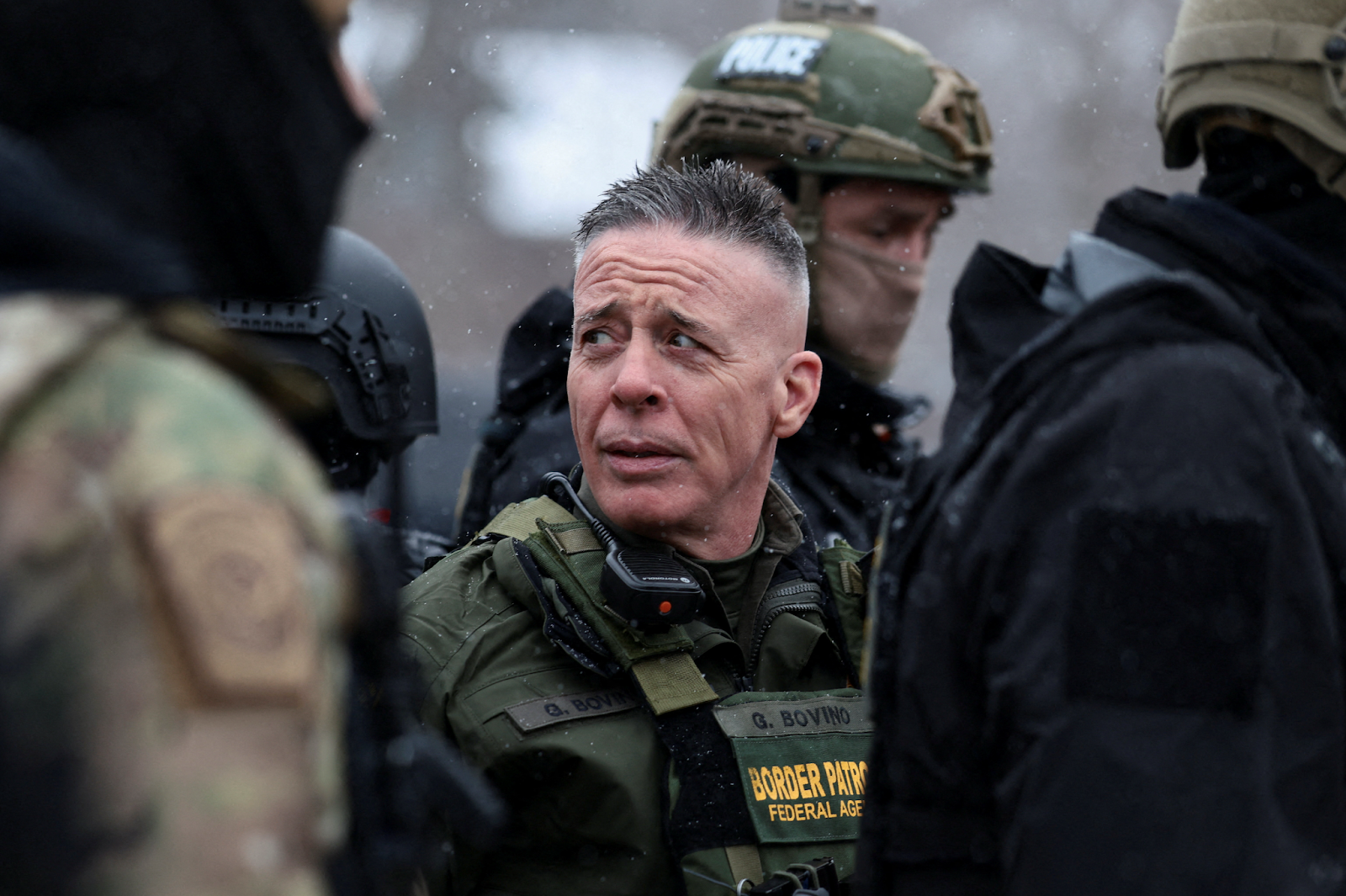
Pretti’s shooting was quickly recognized by the entire country as an act of injustice. Both Democratic and Republican lawmakers called for an investigation into the killing. Gregory Bovino, orchestrator of high-intensity immigration sweeps and arrests, was removed from his role as Border Patrol commander and reassigned to his former post in El Centro, California. The agents involved were placed on leave immediately following the shooting.
Liam Conejo Ramos, a five-year-old boy in Minnesota, became a symbol of the consequences of ICE brutality, with his blue bunny hat and spiderman backpack. He was detained by ICE agents in his driveway and held as bait for his father before the two were quickly detained and taken to an immigration detention center outside San Antonio. After seven days, the two were released following a judge’s order. The family’s attorney called the pair “traumatized” but “holding up.”
Operation Midway Blitz is the name for ICE, Border Patrol and federalized National Guard troops’ massive immigration surge in Chicago that began in September 2025. According to DHS, the operation was launched “in honor of Katie Abraham, who was killed in Illinois by a criminal illegal alien.” On September 12, a man was fatally shot by a federal immigration officer in Franklin Park during an arrest attempt. On September 19, protests began that were responded to with flash bangs, tear gas and rubber bullets — tactics used by ICE in multiple cities where agents are deployed. Other tactics used to detain people involve breaking down doors and car windows and carrying people by their limbs while they are handcuffed. On September 30, agents (Border Patrol and FBI) raided a South Shore apartment complex overnight, where dozens were detained. During October, tear gas was used during multiple protests and parades, even affecting Chicago police officers. Chicago is a sanctuary city, where police officers do not have a responsibility to communicate immigration status to immigration enforcement officers. Chicago Police Department Superintendent Larry Snelling said that if you box agents in with vehicles, it is reasonable for them to believe that they are being ambushed. He told Chicagoans that one is putting themself in danger by following law enforcement around, and it is reasonable for officers to react to the threat of potential harm. Snelling gave his full support to the border patrol chief.
In the case of some Venezuelans in the United States, many (whether citizens or not) thought they were being taken to Venezuela but instead were shackled and paraded in front of cameras on their way to CECOT, a prison in El Salvador where the conditions do not adhere to United Nations standards. In a 60 Minutes segment, William Lazada Sanches spoke on his experience with sexual abuse, beatings with batons, extreme heat, unclean water, unadressed injuries, food shortages and inhumane conditions. Many have been wrongly sent to the prison, incorrectly accused of being a part of violent gangs because of a faulty system that misidentifies tattoos. It follows a point system: eight points confirms you are in the gang Tren de Aragua and are deemed deportable. Things like tattoos suspected of gang behavior are four points, despite the fact that Tren de Aragua does not use tattoos to symbolize membership.
Other detainees are brought to detention centers prior to deportation or resolving the case. Conditions reported by the National Immigrant Justice Center include overcrowding, unsanitary and inadequate food, physical and verbal abuse and lack of access to legal counsel and healthcare. Over 90% of ICE detention centers are run by private, for-profit companies.