

A university’s ultimate test is not how convincingly it responds once a crisis becomes public but how reliably it protects students before a lawsuit, a viral post, or a national headline forces it to act. That is the question facing Cornell University after a former student filed a civil lawsuit alleging that she was drugged and sexually assaulted by seven fraternity members over a seven-hour period at the Chi Phi house in 2024, and the school did nothing about it despite having full awareness of the situation.
The legal process must determine what happened and whether anyone bears criminal responsibility. For now, the allegations in this lawsuit remain unresolved, and according to the New York Times, “all the men denied any wrongdoing.” Yet Cornell’s responsibility extends beyond the criminal investigation to whether it consistently enforces the safeguards intended to protect students. In November 2026, TMZ published a 2022 email in which a Cornell police officer warned of a “disconnect between policy and what is being done,” alleging that fraternity violations warranting suspension routinely went insufficiently punished. The officer specifically identified Alpha Epsilon Pi—not Chi Phi—and wrote that an interim suspension would have prevented that chapter from hosting an event on the night of an earlier and different alleged drugging and sexual assault. That warning does not establish what could have prevented the alleged 2024 incident, but it raises a serious question: what is a safety policy worth if students cannot trust the university to enforce it?
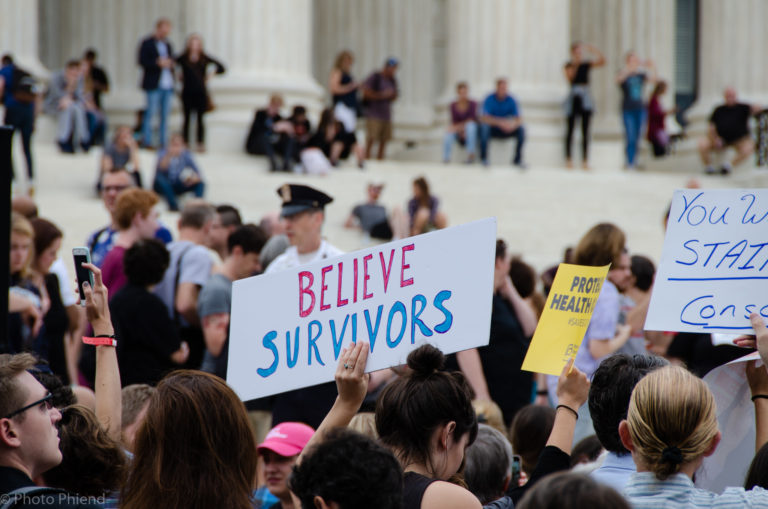
The demand for a fair, timely response to reports of sexual violence has become inseparable from the online response to this case. #IAmJaneDoe began as an effort to protect the plaintiff’s anonymity, which, according to CBC News, occurred after an independent journalist publicly called on September 28 to identify her “so we can all evaluate her veracity.” As reported by ABC News, Jane Doe “has faced a series of threats and doxxing attempts in the three weeks since filing her explosive lawsuit.” The online movement, #IAmJaneDoe, has since become a broader expression of solidarity: thousands of users have used this hashtag to show support for the plaintiff and to describe their own experiences with sexual violence. A person alleging harm should not have to surrender their privacy in order to be treated with seriousness and dignity. Protecting people who come forward is therefore not simply a gesture of solidarity with one plaintiff, but rather part of making campuses safer places to report harm.
When announcing the appointment of a special prosecutor, Gov. Kathy Hochul said the case raised broader questions about “Cornell’s campus culture and its systems for prevention, reporting, and response.” These are undoubtedly necessary questions, but the fact that they are being asked through a viral movement also exposes a deeper problem: students should not have to turn to social media to understand how their university responds to sexual violence. Cornell says in an issued statement on September 28 that it “conducted a thorough Title IX investigation” over several months, imposed suspensions and expulsions, and continued to bar the Chi Phi chapter from campus. Federal privacy law limits what the university can disclose about individual disciplinary cases. Privacy rules do not prevent Cornell from explaining what students need most: where to report, where to find confidential support, what protections apply during an investigation, and what changes the university will make when its systems fall short.
At the same time, visibility is not a verdict. Social media can make a crisis harder to ignore, but it cannot replace a careful investigation. Posts containing names, screenshots, and difficult-to-verify claims can quickly turn public attention into harassment or trial by internet. Taking the lawsuit seriously does not mean treating every repost as proof. It means protecting the plaintiff’s anonymity, rejecting doxxing, and demanding that investigators pursue the evidence wherever it leads.
That last standard matters because trauma does not always arrive as a perfect narrative. Too often, public discussion expects a person reporting sexual violence to immediately give a completely consistent and chronological account. Fear, intoxication, shame, dissociation, and trauma can all affect this disclosure. Dave Thompson, a certified forensic interviewer quoted by NPR, said: “Gaps and inconsistencies in an assault survivor’s police statement are often a product of a victim’s trauma and of how officers question them—not evidence that she’s unreliable.”
A trauma-informed approach, on the other hand, does not automatically presume an allegation is true, but rather that it aims to train investigators to act in a way that anticipates how survivors might respond differently after an assault. Yet Rebecca Campbell, a psychology professor at Michigan State University, noted that “most US police are not trained in this approach.” The public should demand neither a social-media verdict nor blind trust in institutions but a process capable of finding facts fairly and competently.
Cornell’s reputation should not be measured by whether it can outlast this news cycle—nor should one case define an entire university. Still, students and families are right to ask what happens when a student reports harm: Who listens? Who investigates? What support systems are available? And most importantly, does the institution learn when its systems fall short?
Cornell’s own survey data from 2025 shows why those questions cannot wait. 15% of respondents reported nonconsensual sexual contact since coming to the university, up from 11% in 2023. Cornell’s task force also reported that 35% of undergraduate women and 8% of undergraduate men said they had experienced sexual assault involving force or incapacitation during their time at Cornell. These are self-reported survey findings, not proof of any individual allegation, but they point to a campus-wide concern that cannot be dismissed as a public-relations problem.
Cornell should not need a viral headline to make students feel heard, protected, or safe enough to come forward. Its reputation will be defined not by how it manages this moment of public outrage, but by whether it builds a campus where accountability and meaningful support exist long before anyone has to make a crisis go viral.