

In response to coverage of the tragedy at Cornell, the Bystander Education Program (BEP), a student leadership group, worked to educate students about sexual misconduct, campus policies, and ways to support those affected. The primary goal of the BEP is to help create real change, listen to student experiences, and encourage community members to be upstanders–individuals who intervene when they see or
As Choate renovates campus buildings and pathways this fall, students may not notice many of the changes. However, improving accessibility without making the changes stand out is the exact goal, according to Chief Financial Officer Mr. Patrick Durbin.
Across campus, Choate is making a series of small changes designed to make buildings and pathways accessible to everyone. “If we do it right, most people won’t even notice,” Mr. Durbin said. “It looks like it’s always been there.”
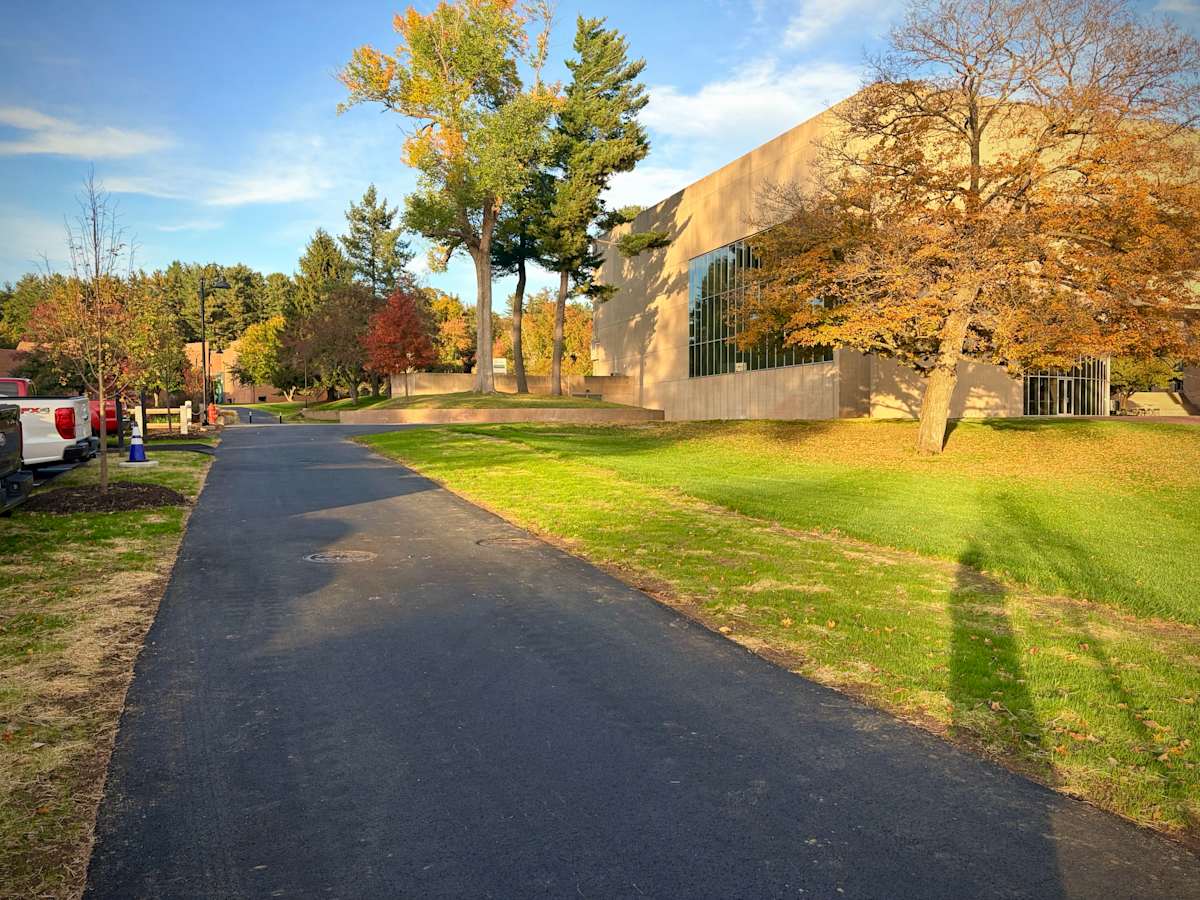
One of these changes came with the renovation of the Pond Lot. Both the stairs from the parking lot into PMAC Circle and a second staircase leading to the Science Center were demolished this fall. Now, someone using crutches, a scooter, or a wheelchair can park in the Pond Lot and access the Great Lawn without going all the way around the PMAC.
Inside PMAC, a new six-story elevator reaches every level of the theater side. The visual arts side is also being upgraded with an elevator, which should be completed by the winter term. The renovated building will host a community open house in November.
The library will soon be accessible from top to bottom, with a new elevator connecting the basement through the study rooms, archives, and dorms. A small addition facing the dining hall will allow visitors to enter at ground level rather than use the back stairs. Next door, an old staircase at Steele Hall’s main entrance has been removed to make way for a sloped ramp, part of the new garden between these two buildings coming this May.
For Mr. Durbin, the key is that everyone uses the same door. Before the renovation, a student who was wheelchair bound had to go around the side of Steele Hall and enter through the basement. The new ramp leads to the front door “so that anybody coming to the building can use the same entrance as their friends,” he said.
Construction crews have not been without surprises. When installing the PMAC elevator, crews ran into rock much sooner than expected. Still, Mr. Durbin said none of the projects have been delayed so far.
Smaller dorms like Pierce and Lewis House are harder to modify for accessibility, since there is no space to install an elevator. For now, Choate considers practical details, such as whether a dorm’s common room is on the ground floor or in the basement. Part of the plan, Mr. Durbin said, is building a new dorm so that smaller houses like Lewis “would actually contract into a 30-person dorm.” By building a new larger dorm, Choate can absorb students who would otherwise occupy scattered smaller dorms.
Next on his list are the stairs between the rink parking lot and the Class of ’76 field, which could be replaced by a longer, gently sloped path. All of these projects reflect Choate’s broader approach to accessibility by making practical changes across campus so that students and visitors can navigate the campus with ease.
hear something wrong as opposed to standing passive and silent, regardless of the stakes. On October 13, BEP student leaders and faculty hosted “Consent, Support, and Responding to Harm,” a session covering trauma responses, Choate’s sexual misconduct policy, and support in response to recent events. Three BEP student leaders – Nick Aston ’28, Caydence Coyne ’28, and Ryan Murray ’27 shared practical ways to intervene, seek help, and look out for peers when something feels wrong.
BEP Adviser Mr. James Davidson (“JD”) said that the leadership group of fifth- and sixth-formers had been working on upstander education initiatives for form and school meetings since Sexual Assault Awareness Month last spring. When the School Administration asked BEP to participate in the special programming, JD said, “We were able to tie in what we were already working on” while addressing the recent tragedy at Cornell. They wanted “to be sure to mention it, to name it, but not in any way pretend that we know exactly what happened,” said JD. For this reason, the BEP portion of the session focused primarily on consent and statistics surrounding sexual misconduct.
Coyne reflected on BEP’s approaches to sensitive topics, saying, “We wanted to stick to the facts and [share] how we work on campus.” By presenting statistics and information about sexual misconduct, the BEP aimed to spread awareness and encourage people to break the cycle of complicit inaction. They also shared the “Four Ds,” a strategy that advises on situations involving sexual misconduct or peer trauma: direct, distract, delegate, and delay. These strategies offer students practical ways to respond to situations involving sexual misconduct or peer trauma. Through this programming, BEP hopes to equip students with the knowledge and confidence to intervene when necessary.
When asked what advice she would offer a student seeking support, Coyne emphasized the importance of asking for help. “Don’t be afraid to reach out. I understand that it can be nerve-racking and scary if you are seeking support. However, it’s important to know that we are here to help.” Through its ongoing efforts, BEP hopes to ensure that students not only are able to recognize harmful situations, but also feel empowered to take action and support one another.