


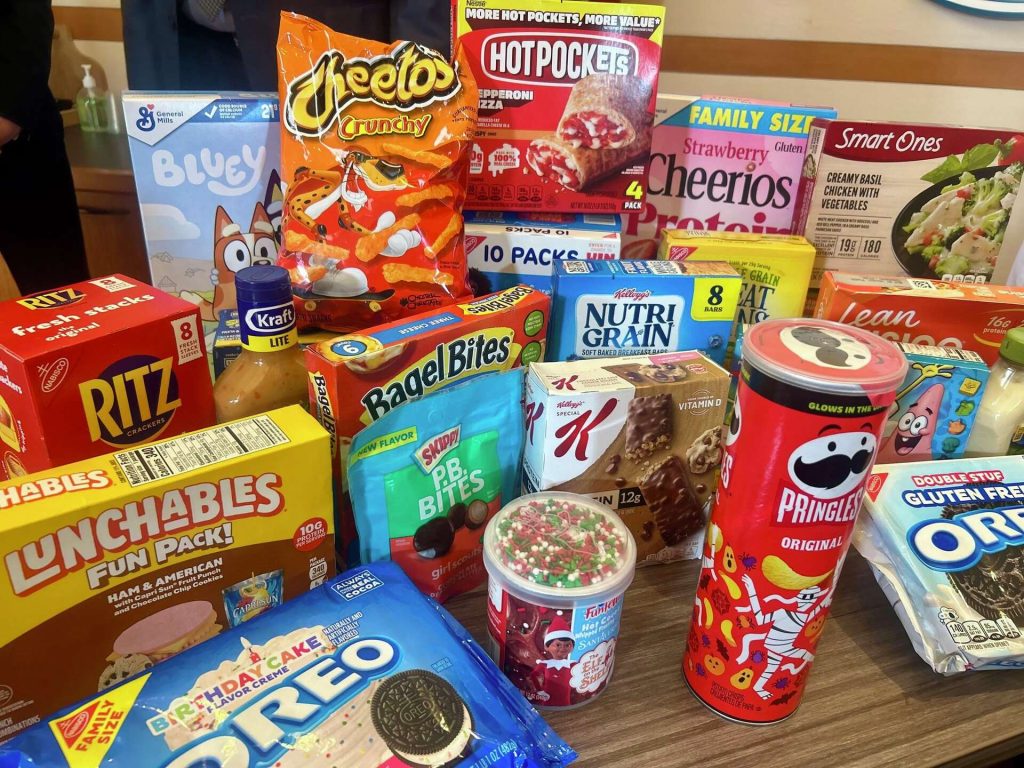
Snack time. At Dana Hall, it is available in Common Ground at least twice per day: once after advisory or morning meeting, and once before co-curriculars. Dana Hall’s snacks do a good job of helping students get from breakfast to lunch without crashing, and fueling them for their after school activities. However, the snacks provided are overwhelmingly ultra-processed, which is not optimal for the long-term health of Dana Hall students.
If you go grab a snack, you will encounter Goldfish, Cheez-its, Teddy Grahams, Nilla Wafers, Fritos, Cheetos, different varieties of cheese puffs, kettle chips, and bagged popcorn. These are considered ultra-processed, which means they “have one or more ingredients that wouldn’t be found in a kitchen, like chemical-based preservatives, emulsifiers like hydrogenated oils, sweeteners like high fructose corn syrup, and artificial colors and flavors,” according to Johns Hopkins Bloomberg School of Public Health. Researchers from Johns Hopkis also state that “[Ultra-processed foods] undergo processing techniques like pre-frying, molding, extrusion, fractioning, and other chemical alterations that leave the final products bearing almost no resemblance to the original ingredients”.
Ultra-processed snacks are universally more convenient to provide, and they are cheaper and generally shelf-stable. Individual packaging allows students to move through Common Ground quicker. The snacks get the job done, providing students with enough quick calories to sustain them until their next meal, but while these ultra-processed snacks seem like a good option in the short term, the long-term often shows deleterious effects to individual health.
Dalia Perelman, a research dietitian with the Stanford Prevention Research Center, states that “dozens of studies have provided evidence suggesting that high ultra-processed food consumption is associated with a range of adverse health outcomes, including obesity, metabolic syndrome, heart disease, cerebrovascular disease, depression, anxiety, cancer and mortality from all causes”.

Allowing students unfettered, free of charge access to these ultra-processed snacks is damaging. Students reach for the Cheez-its once or twice a day, and they develop a habit of consuming these foods on a regular basis. For young adolescents who are just beginning to figure out their own eating patterns separate from their parents’, this could throw them off track, making a pivot towards a healthier diet later in life potentially harder. Naturally, younger adolescents who do not know the long-term consequences of consuming ultra-processed foods will gravitate towards them when available, forsaking the more healthy options in favor of the more interesting, appetizing option.
On the healthier side of snack selection at Dana Hall, there is almost always a fruit bowl and other more “whole” options to choose from, especially earlier in the day. Of course, the fruits only last a couple of days before going bad, and are more expensive and labor-intensive for the Dining Hall staff, which immediately makes them less preferable to the ultra-processed snacks, which can sit around in a box for a while before being served.
Luckily, not all prepackaged snacks are “bad for you”, meaning Dana Hall doesn’t need to have a constant rotation of fresh foods, which is more laborious. There are a number of healthier affordable options available that are more focused on whole foods rather than a chemical concoction. The issue is that Dana Hall trends towards the more unhealthy snacks.
The challenge comes with discovering foods that strike the balance between popular enough to eat, and healthy enough to make a difference. Here are some pre-packaged snacks that offer a comparably better nutritional value, while also maintaining the convenience of the single serving grab-and-go style.
A popular prepackaged healthy snack that tends to be popular among youth is seaweed snacks. While they are technically processed, they offer a more nutrient-dense composition than chips for example, as “seaweed is low in calories, fat, and sugar, and is typically a good source of minerals” according to Harvard Health. It is also completely vegan and gluten-free. A similar prepackaged healthy option is edamame snacks. “Edamame is a vegan source of complete protein. That means that it contains all nine essential amino acids. This protein-powerhouse delivers 20 grams of protein per pack plus 8 grams of fiber, making it the perfect go-to snacking option,” says registered dietitian Stefani Sassos.


For a more naturally sweet and carbohydrate-dense option, offering more short-term energy, dried fruits are a great way to go. Healthline says that “dried fruit is loaded with micronutrients, fiber and antioxidants,” which is a great addition to anyone’s daily nutritional add-up.
In addition to these options available for purchase, Dana Hall can build off of pre-existing snacks, such as putting sliced apples into individual bags for students to snack on. Though Dana Hall already serves apples, students may be more willing to eat them if already pre-sliced, especially for students with braces who find it tricky to bite into whole apples, or students on a time-crunch.
The balance of convenience, affordability, and health can be hard to achieve, but if Dana Hall emphasizes and provides healthier snack options, moving away from letting ultra-processed foods rule the snack scene, students will be set up for nutritional success that will extend beyond their time at school.